A faint musty smell in a room you keep clean is one of the quietest ways a house tells you something is wrong behind the wall. By the time water shows on the surface, it has usually been working inside the cavity for weeks. Catching it early is where good plumbing turns a small stain into a five-minute fix instead of a framing-and-mold project.
Here is the fast answer. The most common signs of a hidden water leak behind walls are a sudden jump in your water bill, yellow or brown stains, bubbling or peeling paint, soft or cool drywall, a musty odor, mold along baseboards, and the sound of running water when every tap is off. Any one of these means water is moving where it should not, and the wall is hiding the source.
Why a Small Wall Leak Can Become a Major Repair?
The trouble with a leak behind a wall is that the wall covers it, so the clock runs against you before you even know there is a problem. Water does not stay where the pipe fails. It travels along the studs, soaks the insulation, and pools far from the actual break, which is why the damp patch you find is rarely over the leak itself.
Speed is the real danger. According to the U.S. EPA, mold can begin growing on damp drywall and wood framing within 24 to 48 hours under the right conditions, and a wall cavity is close to ideal for it: dark, still, and full of the paper and wood that mold feeds on. Left alone, that moisture rots framing, rusts fasteners, and ruins insulation. A pinhole leak in a supply line has grown into repairs topping $12,000 once mold reached the studs and subfloor. The waste adds up too. The EPA’s WaterSense program reports that household leaks waste close to 1 trillion gallons of water across the country every year, the average home loses about 10,000 gallons annually, and one in ten homes has a leak wasting 90 gallons or more a day. A leak behind the wall is one you pay for twice, on the water bill and again on the repair.
How a Rising Water Bill Can Reveal a Hidden Wall Leak?
Your water bill is often the first hard proof, because a supply line inside a wall leaks under pressure, around the clock. If your habits have not changed, no pool filling, no extra guests, no new sprinklers, and the bill still jumps 20 to 25 percent, that pattern points straight at a hidden supply leak feeding water into the wall.
You can confirm it in a few minutes without any tools. Turn off every faucet, the dishwasher, the washing machine, and anything else that uses water, then go read the meter. If the small sweep hand or the low-flow triangle keeps moving with everything shut off, water is escaping somewhere in the system. That single test tells you the leak is active and pressurized, which is exactly the kind that does the most damage inside a wall.
What Water Stains, Bubbling Paint and Soft Drywall Mean?
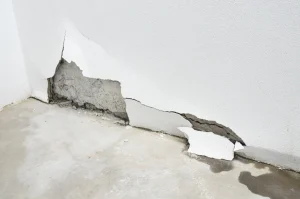
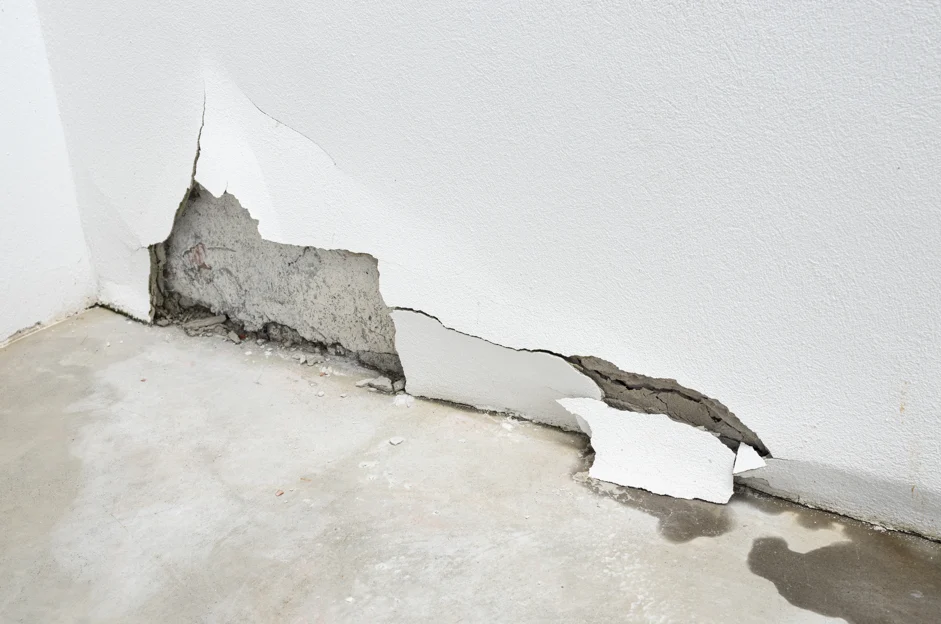
The wall surface shows the leak long before it drips, if you know what to read. These are the visual and tactile signs worth checking room by room:
- Yellow or brown stains. Tea-colored rings or downward streaks on drywall or the ceiling. They start small and spread outward as the leak continues.
- Bubbling or peeling paint. Trapped moisture separates the paint or wallpaper from the drywall, so the surface blisters or lifts at the corners.
- Soft or cool drywall. Press gently. Wet drywall loses its firmness and feels spongy, swollen, or noticeably cooler than the drywall a few feet higher.
- Warped trim and baseboards. Baseboards, casings, or nearby flooring that cup, buckle, or feel damp at floor level signal water wicking through.
- White chalky residue on masonry. Efflorescence is the salt water leaves behind, and it is proof that moisture has moved through the wall even when the rest looks dry.
Painting over a stain does none of the work that matters. It hides the symptom while the moisture keeps rotting framing and feeding mold out of sight, so the stain returns and the damage grows underneath.
Also Read: Why Hiring Certified Plumbers is Crucial for Staten Island Homes?
Why a Damp Smell Can Signal a Leak Behind the Wall?
Your nose often beats your eyes to a hidden leak. A persistent earthy, damp, old-basement smell in a room that stays clean means moisture is trapped in the cavity, and mold has started to feed on it. That odor can arrive weeks before any stain appears on the surface.
When it does become visible, mold shows as black, green, or white growth along baseboards, in corners, and around outlet and switch covers, since those gaps let cavity air seep out. Beyond the damage to the house, the spores drift into the air you breathe and can trigger breathing problems, which is why a small patch is never worth ignoring. Mold near the wall almost always means water has been present for a while, so the smell is a cue to find the source rather than mask it with an air freshener.
Why You Hear Water Running Inside a Quiet Wall?
Sometimes the leak announces itself. A faint drip, a soft hiss, or the sound of trickling water inside a wall while every fixture is off is a strong sign of an active leak. These sounds are easiest to catch at night or in a quiet house, when there is no background noise to cover them.
A steady hiss usually points to a pressurized supply line, while an occasional drip after you use a sink or shower leans toward a drain or waste line. Either way, water moving in a wall that should be silent is telling you where to start looking.
How Plumbers Find a Wall Leak Without Tearing It Open?
You do not have to knock holes in the drywall to find the source, and a good plumber rarely starts there. Detection today is mostly non-invasive, and it works from the outside of the wall in:
- The meter test confirms an active leak, as covered above, before anyone touches a wall.
- A moisture meter, which runs about $30 to $80 at a hardware store, reads the dampness inside drywall so you can map how far the wet area spreads.
- Thermal imaging uses an infrared camera to show cool, wet zones behind the surface that the eye cannot see, which narrows the source to a small area.
- Acoustic listening equipment picks up the sound of pressurized water escaping a supply line, even deep in a wall.
Professional leak detection combines these so the wall gets opened in one small, correct spot rather than guessed at. Finding the exact source first is what keeps the repair small and the drywall damage minimal.
Why Fast Leak Repair Protects Your Home and Insurance Claim?
Once you have any of these signs, the move is to find and stop the source, not to cover it. Start with the meter test and a moisture meter to confirm and locate the wet area. From there, a licensed plumber traces it to the failed pipe and handles the pipe repair inside the wall. If the leak turns out to be one of several in aging galvanized or old copper lines, repiping that section is often the smarter long-term call than patching the same run again and again.
Insurance is worth a quick note here. Many policies cover sudden and accidental leaks, like a pipe that fails behind a wall, but they tend to deny claims for slow, long-term seepage that was left unaddressed. That gap is one more reason to act on the first sign rather than wait, since the longer the water runs, the more it looks like neglect and the less it looks like an accident.
Protect Your Walls From Mold and Structural Damage
Every day that water keeps running behind your wall, it is quietly turning a cheap pipe fix into a mold, insulation, and framing job, and it is doing it where you cannot see a thing until the smell or the stain finally shows. Waiting only widens the repair and the bill.
We at RK Plumbing & HVAC Services LLC are a licensed plumbing and HVAC team that finds hidden leaks with non-invasive tools, traces them to the exact pipe, and fixes the source so your walls dry out and stay dry. We check the meter, map the moisture, and open only what is necessary before providing expert leak repair and repiping solutions with minimal disruption to your walls.
Stop letting a leak you cannot see run up the damage. Contact RK Plumbing & HVAC Services LLC at the first stain, smell, or bill spike, and get the source found and fixed before it reaches your framing.
FAQs
How can I tell if water is leaking behind my wall without opening it?
Watch for stains, bubbling paint, soft or cool drywall, a musty smell, and mold at the baseboards. Confirm with a meter test and a hardware-store moisture meter, and a plumber can add thermal imaging to pinpoint the spot.
Can a small hidden leak really cause serious damage?
Yes. Mold can start within 24 to 48 hours, and water travels along framing far from the source. A pinhole leak left for weeks can soak insulation, rot studs, and turn into a repair costing thousands.
Why did my water bill spike with no change in usage?
A pressurized supply leak inside a wall runs 24 hours a day, so it shows up as a 20 to 25 percent jump with no change in habits. Turn off all water and watch the meter to confirm.
Is a musty smell always a leak?
Not always, but a persistent damp smell in a clean, dry room usually means trapped moisture feeding mold in a cavity. It often appears before any visible stain, so it is worth investigating early.
Should I just repaint over a water stain?
Painting over it hides the symptom while the moisture keeps working underneath, so the stain returns and the framing keeps rotting. Find and fix the source first, then repair the surface.